
Interconnect-first design
We specify NVLink or PCIe based on how your workload actually scales, not on GPU count alone.
MinersDeals
Dense 4- and 8-GPU nodes with NVLink or PCIe Gen5 topologies, engineered for scaling efficiency rather than raw GPU count.
Need 10, 50 or 100+ units? Request volume pricing.
| Manufacturer | MinersDeals |
|---|---|
| Model | Multi-GPU Servers |
| Hashrate | 4-way & 8-way nodes |
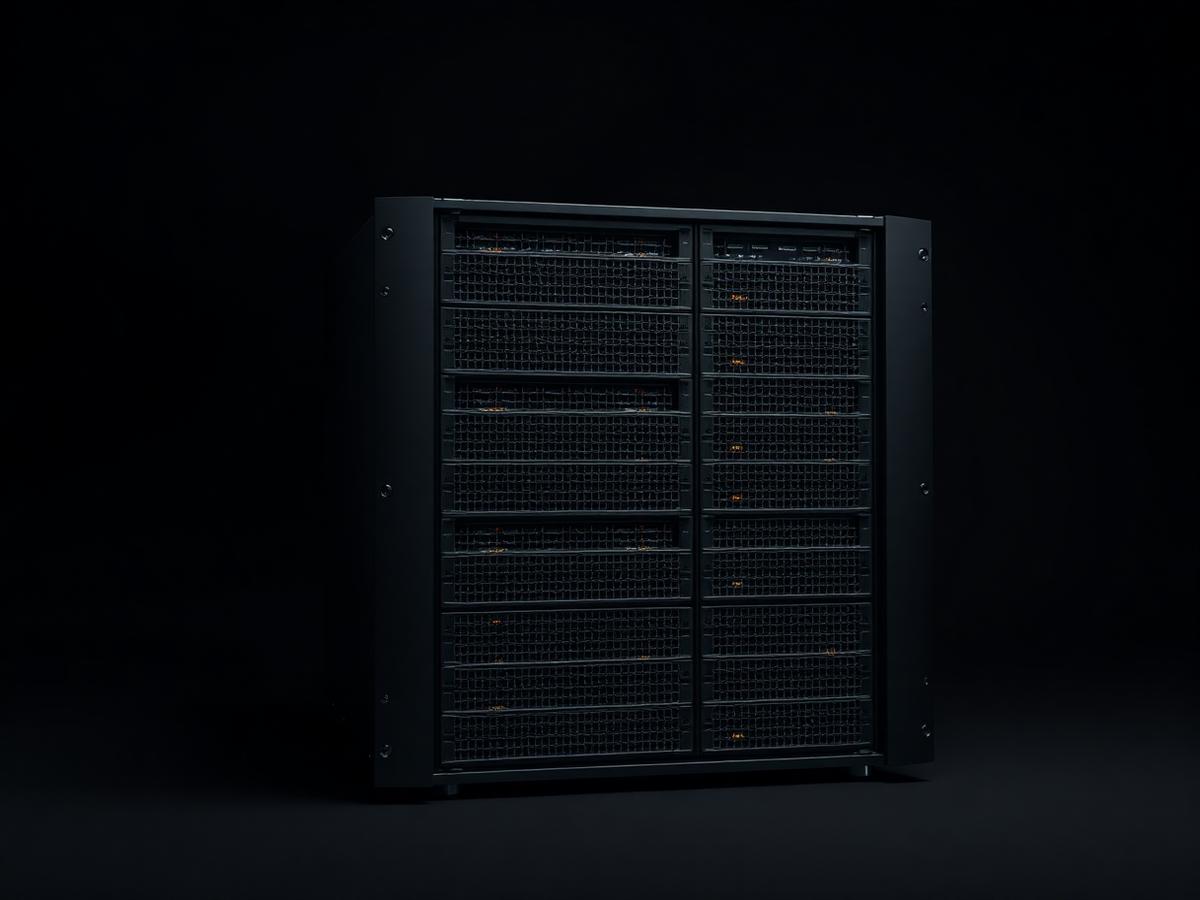
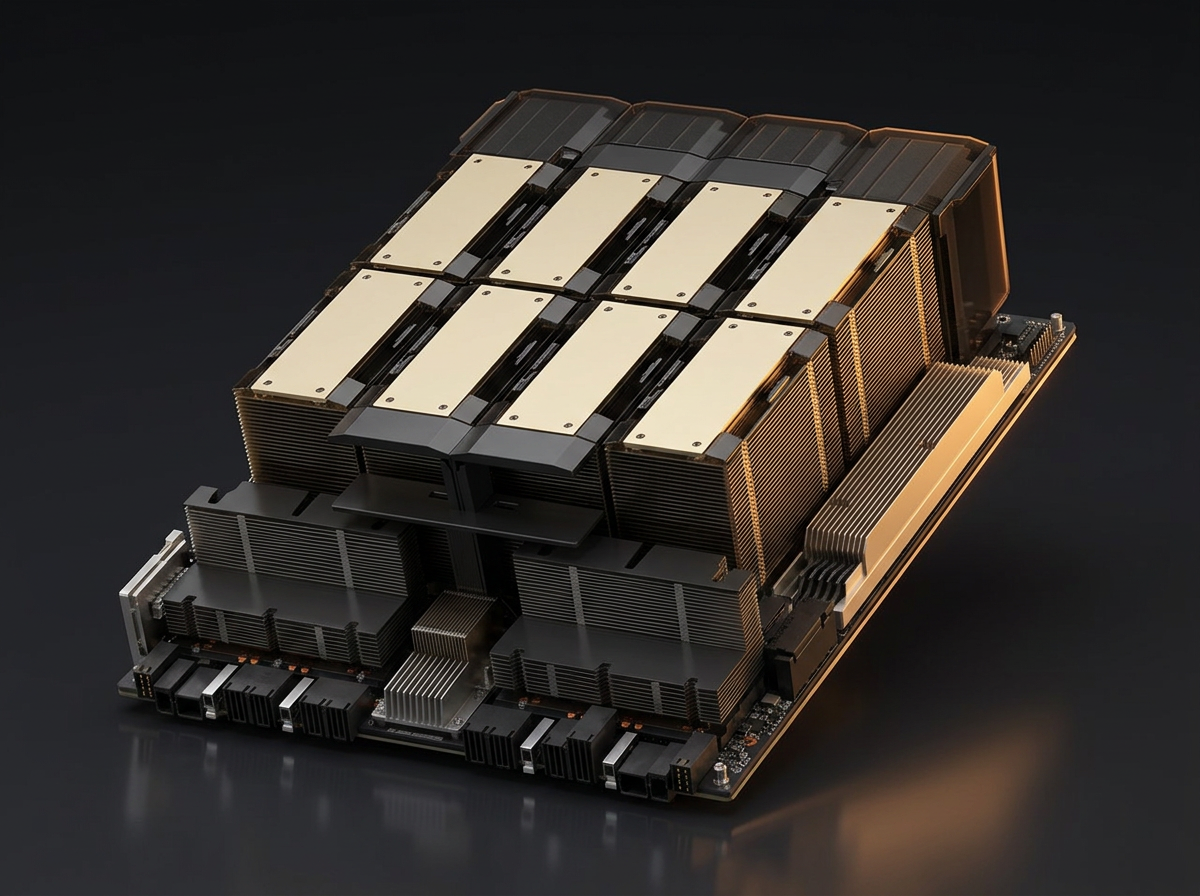
A multi-GPU server places four or eight accelerators in one chassis and connects them with either an NVLink/NVSwitch fabric or PCIe Gen5. The interconnect choice, not the GPU count, usually determines how well a workload scales across those GPUs.
Doubling GPUs rarely doubles throughput. On distributed training, collective operations dominate scaling behaviour, so an eight-GPU node on an NVSwitch fabric with 900 GB/s of GPU-to-GPU bandwidth behaves very differently from eight PCIe cards sharing host bandwidth.
That is the central design decision we work through with buyers. Training workloads and large-model inference generally justify SXM baseboards with NVLink. Embarrassingly parallel inference, batch rendering and many fine-tuning jobs run perfectly well on PCIe topologies at meaningfully lower cost.
Beyond the node, the cluster fabric matters just as much: NIC-to-GPU affinity, rail-optimised topologies and 200–400G per node keep multi-node runs from stalling on communication.
| GPU count | 4-way or 8-way per node |
|---|---|
| Topology options | HGX SXM with NVSwitch, or PCIe Gen5 with optional bridges |
| GPU-to-GPU bandwidth | Up to 900 GB/s on NVLink fabrics |
| Networking | 200G–400G Ethernet or InfiniBand, rail-optimised |
| CPU | Dual-socket, sized to GPU count and data pipeline |
| Storage | NVMe scratch plus network storage integration |
| Power | Approximately 6–12 kW per node, redundant PSUs |
| Cooling | High-airflow chassis or direct-to-chip liquid |
Eight-GPU nodes concentrate 6–12 kW into a few rack units. Even two such nodes exceed the design density of many older colocation halls, so power per rack and heat rejection capacity should be confirmed before hardware is ordered.
Air-cooled dense nodes need strict containment, blanking panels, controlled inlet temperature and enough CFM at high static pressure. Any recirculation between hot and cold aisles shows up quickly as throttled clocks.
Direct-to-chip liquid cooling raises achievable rack density substantially and reduces fan power, at the cost of manifolds, CDUs and leak detection. For greenfield AI halls it is increasingly the default rather than the exception.
We specify NVLink or PCIe based on how your workload actually scales, not on GPU count alone.
NIC placement and fabric topology chosen so multi-node collectives do not become the bottleneck.
Power per rack, airflow and cooling method are validated against your facility before ordering.
Pricing for the Multi-GPU Servers can vary depending on quantity, availability, market conditions and fulfillment requirements. MinersDeals provides individual and volume quotes for qualified buyers, so we publish current pricing on request rather than as a fixed list price.
Buying multiple units? Ask about volume pricing.
Looking to purchase the Multi-GPU Servers? MinersDeals helps individual buyers, mining operators and enterprise customers source specialized hardware. Submit your requirements to receive current availability and pricing.
Planning a larger deployment? Request pricing for 10, 50, 100 or more units. MinersDeals supports hardware procurement for mining farms, hosting providers and infrastructure operators, including staged delivery across multiple sites.
Rarely. Scaling depends on the interconnect and the workload's communication pattern. NVLink fabrics scale far better than PCIe for collective-heavy training.
Choose NVLink for distributed training and very large models. PCIe is usually sufficient and cheaper for independent inference workloads.
Typically 8–12 kW depending on GPU model and CPU configuration.
200G to 400G per node is common for multi-node training; inference clusters often run comfortably at lower speeds.
Yes — see our AI cluster configurations for fabric, storage and staged multi-rack delivery.
Tell us the quantity, destination and deployment timeline, and our team will come back with current availability and a quotation.