
141 GB per GPU
Fits larger models and longer context windows on fewer GPUs, cutting both node count and inter-GPU communication overhead.
NVIDIA
141 GB of HBM3e at 4.8 TB/s — the memory-bandwidth workhorse for LLM training and high-throughput inference.
Need 10, 50 or 100+ units? Request volume pricing.
| Manufacturer | NVIDIA |
|---|---|
| Model | H200 |
| Hashrate | 141GB HBM3e |
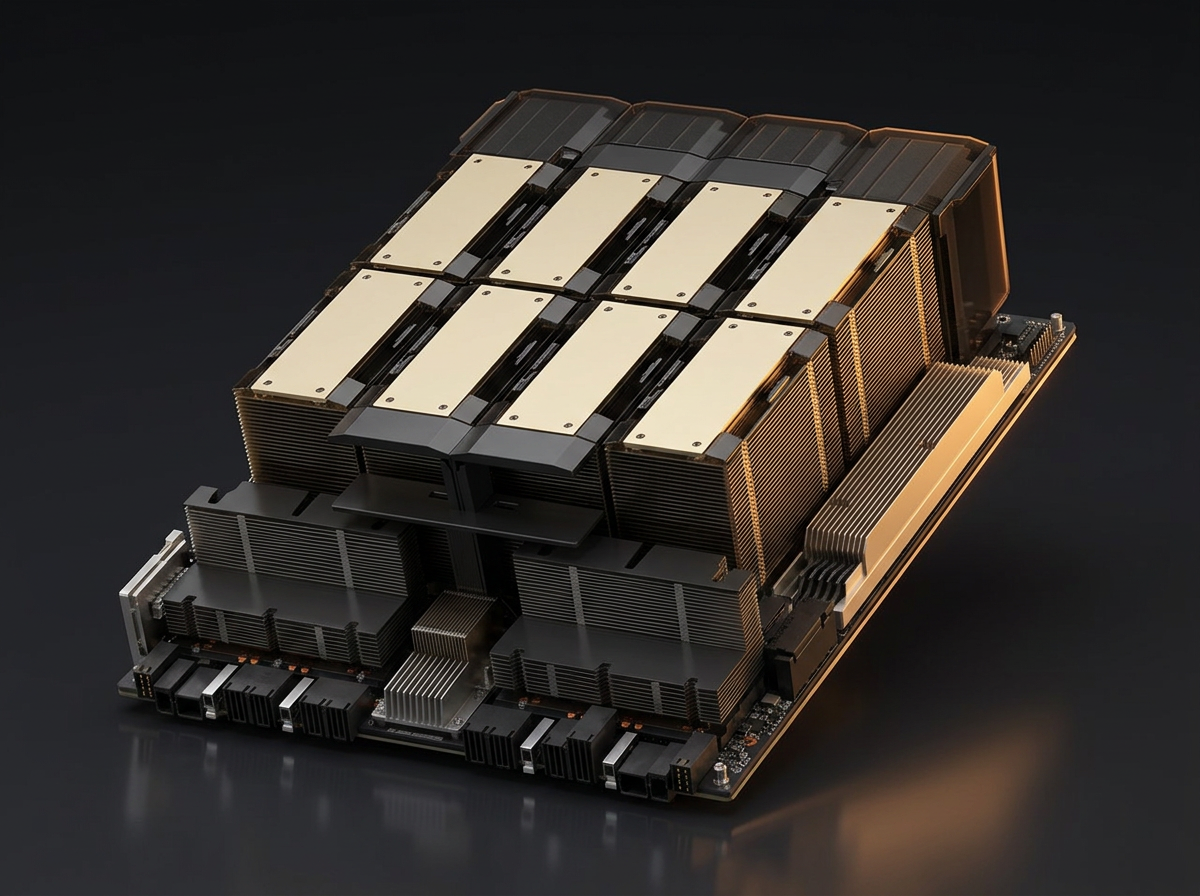
The NVIDIA H200 is a Hopper-architecture data center GPU with 141 GB of HBM3e memory and 4.8 TB/s of memory bandwidth. It ships as an SXM module (up to 700 W, for HGX baseboards) and as the PCIe H200 NVL (configurable up to 600 W), and is used primarily for large language model training, fine-tuning and high-throughput inference.
The H200's defining feature is memory. At 141 GB per GPU with 4.8 TB/s of bandwidth, it holds substantially larger model shards and KV caches than the H100 it succeeds, which translates directly into higher inference throughput per GPU and fewer GPUs needed to serve a given model.
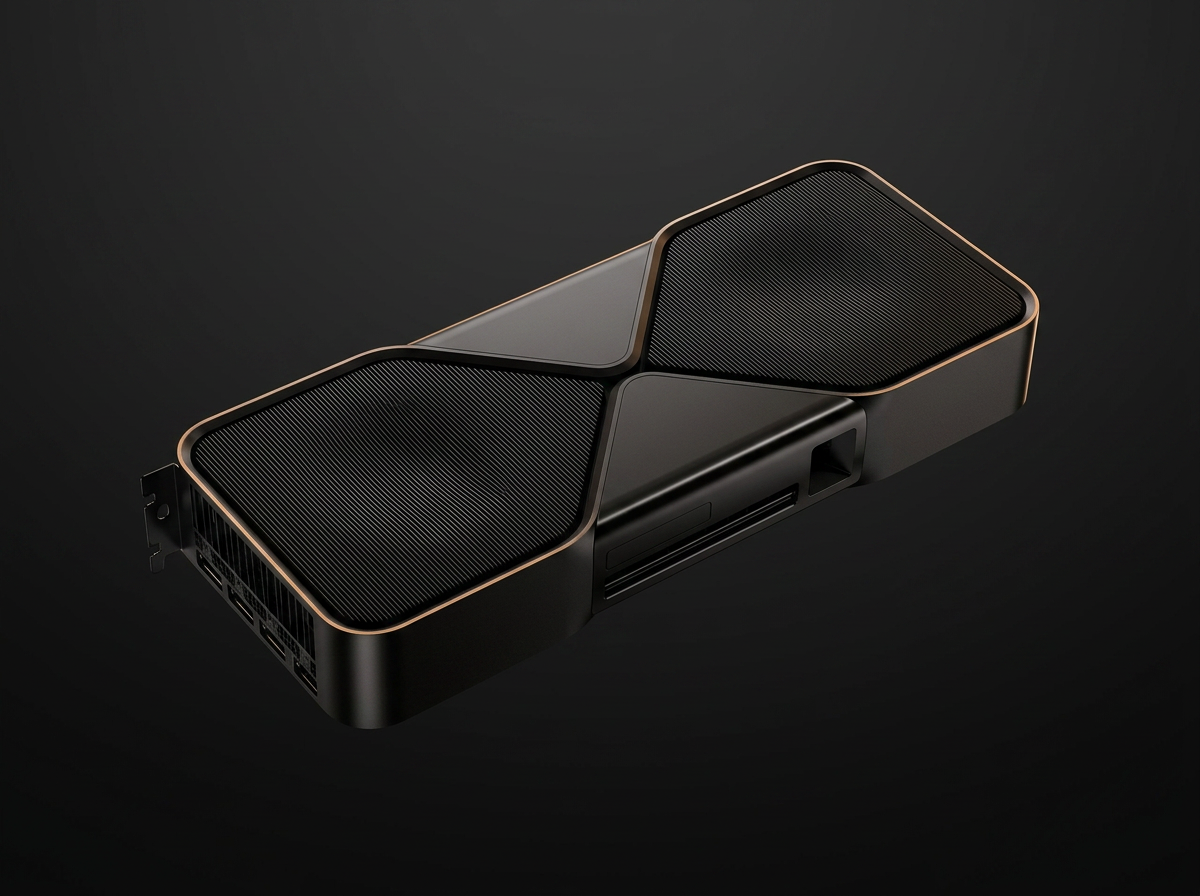
Two variants matter when specifying a build. The SXM module goes onto an HGX baseboard with NVSwitch, giving full 900 GB/s NVLink fabric between eight GPUs — the right choice for training. The H200 NVL is a dual-slot PCIe card with NVLink bridges, air-cooled and configurable from 400 to 600 W, designed to drop into mainstream servers for inference and mixed workloads.
Published tensor figures — 989 TFLOPS FP16 and 1,979 TFLOPS FP8 on SXM — are with sparsity; dense values are roughly half. Hopper has no FP4 tensor path, so workloads targeting FP4 need Blackwell-generation hardware instead.
| Manufacturer | NVIDIA |
|---|---|
| Architecture | Hopper |
| GPU memory | 141 GB HBM3e |
| Memory bandwidth | 4.8 TB/s |
| FP16 tensor (sparse) | 989 TFLOPS (SXM) / 835 TFLOPS (NVL) |
| FP8 tensor (sparse) | 1,979 TFLOPS (SXM) / 1,671 TFLOPS (NVL) |
| FP4 tensor | Not supported on Hopper |
| TDP | 700 W (SXM) / up to 600 W configurable (NVL) |
| Form factor | SXM5 module or dual-slot PCIe (NVL) |
| Interconnect | NVLink 900 GB/s; PCIe Gen5 host interface on NVL |
| Cooling | Air or liquid depending on chassis |
| Availability | Announced Nov 2023; broadly available from 2024 |
An eight-GPU HGX H200 baseboard alone draws around 5.6 kW before CPUs, memory, storage and fans, so a populated node commonly lands between 8 and 10 kW. That is well beyond the 3–5 kW per rack many older facilities were designed for, and it is the single most common blocker in H200 deployments.
Air cooling works at these densities only with high-static-pressure chassis fans, strict hot-aisle containment and cold-aisle inlet temperatures held low. Above roughly 30 kW per rack, direct-to-chip liquid cooling is usually the practical route, and rear-door heat exchangers are a common middle path for retrofits.
The PCIe H200 NVL is explicitly designed for air-cooled mainstream servers with a configurable 400–600 W TDP, which lets integrators trade peak performance for thermal headroom in racks that cannot support SXM densities.
Fits larger models and longer context windows on fewer GPUs, cutting both node count and inter-GPU communication overhead.
Memory bandwidth is the binding constraint for token generation; the H200 raises it substantially over prior Hopper parts.
SXM for maximum training performance on HGX, or PCIe NVL for air-cooled inference nodes in standard racks.
Pricing for the NVIDIA H200 can vary depending on quantity, availability, market conditions and fulfillment requirements. MinersDeals provides individual and volume quotes for qualified buyers, so we publish current pricing on request rather than as a fixed list price.
Buying multiple units? Ask about volume pricing.
Looking to purchase the NVIDIA H200? MinersDeals helps individual buyers, mining operators and enterprise customers source specialized hardware. Submit your requirements to receive current availability and pricing.
Planning a larger deployment? Request pricing for 10, 50, 100 or more units. MinersDeals supports hardware procurement for mining farms, hosting providers and infrastructure operators, including staged delivery across multiple sites.
141 GB of HBM3e with 4.8 TB/s of memory bandwidth.
SXM is a 700 W module for HGX baseboards with full 900 GB/s NVLink fabric. H200 NVL is a dual-slot PCIe card, air cooled, with a configurable TDP up to 600 W and NVLink bridges for 2- or 4-way pairing.
No. Hopper has no FP4 tensor path. FP4 workloads require Blackwell-generation hardware.
The GPUs alone account for about 5.6 kW; a complete node typically lands between 8 and 10 kW.
Enterprise GPU pricing depends on configuration, quantity and availability. MinersDeals quotes current pricing for single units, HGX nodes and full clusters on request.
Tell us the quantity, destination and deployment timeline, and our team will come back with current availability and a quotation.